

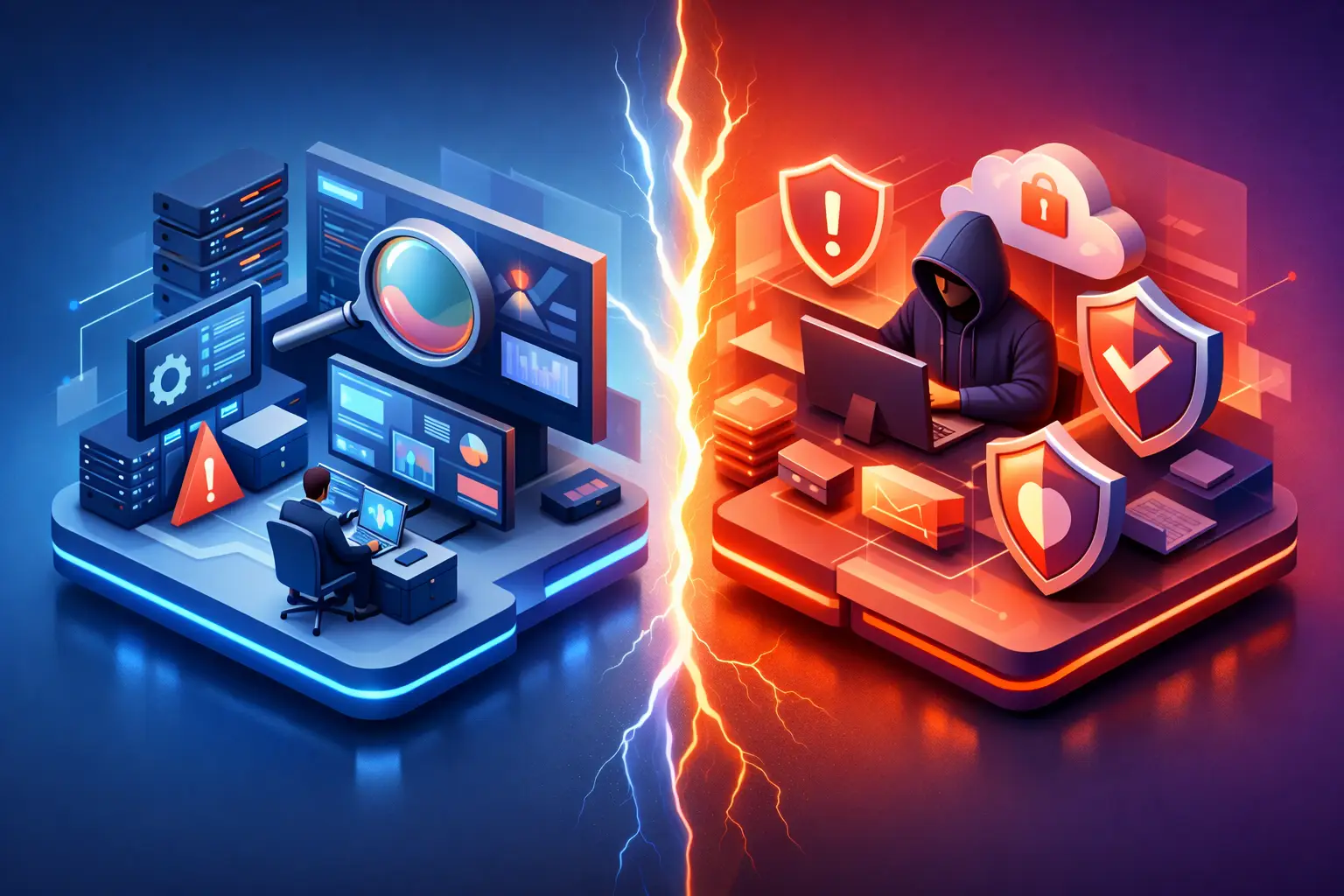
SIEM vs MDR Differences That Matter to Your Business
A security alert at 2:13 a.m. is not a security outcome. For a growing business, the real question is who sees that alert, determines whether it is dangerous, contains the threat, and documents what happened before business operations are affected. That is where the SIEM vs MDR differences become practical rather than theoretical.
Both can strengthen cyber defense. Both may be part of a mature security program. But they solve different problems, demand different levels of internal ownership, and carry very different implications for a small or mid-sized business trying to manage risk without building a full enterprise security team.
SIEM vs MDR Differences: Platform vs. Security Operation
SIEM stands for Security Information and Event Management. A SIEM is a technology platform that collects and analyzes security logs from across an environment. It can ingest data from firewalls, servers, endpoints, Microsoft 365, cloud applications, identity systems, and other sources. The goal is to centralize visibility, correlate events, and flag activity that may indicate a threat.
For example, a SIEM might connect a suspicious login from an unfamiliar country, repeated failed password attempts, and an unusual data download from a user account. By putting those signals together, it can generate an alert that deserves investigation.
MDR stands for Managed Detection and Response. MDR is a managed security service delivered by trained security professionals and supported by detection technology. An MDR provider monitors activity, investigates suspicious behavior, validates threats, and takes or recommends response actions based on an agreed process.
The distinction matters: a SIEM gives your organization a system for collecting and analyzing security data. MDR gives your organization people, processes, and technology focused on finding and responding to threats. An MDR service may use a SIEM, endpoint detection and response tools, threat intelligence, and other platforms behind the scenes. But buying a SIEM alone does not automatically provide 24/7 monitoring or incident response.
What a SIEM Does Well
A well-designed SIEM can be valuable for organizations that need broad log visibility, detailed reporting, or a centralized audit trail. This is especially relevant in regulated environments where leadership must demonstrate that systems are monitored and access activity can be reviewed.
SIEM platforms are often a strong fit when an organization has an internal security team that can manage the operational work. That work includes deciding which logs matter, connecting data sources, creating detection rules, tuning alerts, investigating findings, maintaining retention policies, and responding when the system identifies risk.
This last point is often underestimated. A SIEM can generate a significant number of alerts, especially before it has been tuned to the organization’s environment. Some alerts will be benign. Others may require immediate action. Without experienced staff to distinguish between the two, the organization may pay for extensive visibility without gaining dependable protection.
A SIEM also does not inherently stop an active attack. It can provide the information needed to make a decision, but the response process must be defined and staffed separately. For businesses with an established security operations center, this can be a reasonable model. For many small and mid-sized businesses, it creates an operational gap.
What MDR Adds Beyond Detection Tools
MDR is built around the work that follows detection. The service provider continuously monitors covered systems, investigates meaningful alerts, and escalates confirmed threats according to the response plan. Depending on the service scope and authorization, the provider may isolate a compromised device, disable a risky account, block malicious activity, or guide your internal team through containment.
This human analysis is one of the most significant MDR advantages. Attackers often use legitimate credentials and common administrative tools, making malicious activity harder to identify through automated rules alone. Skilled analysts can assess the context around an alert: who the user is, whether the activity fits their role, what systems were accessed, and whether the pattern resembles known attacker behavior.
For an operations leader or business owner, MDR also creates clearer accountability. Instead of asking whether someone reviewed the alerts, you have a security partner responsible for monitoring, triage, escalation, and documented response. That does not remove your organization’s role in security decisions, particularly decisions affecting users or critical business systems. It does mean you are not relying on a general IT help desk or a busy internal administrator to watch security events around the clock.
The Operational Differences That Affect Risk
The SIEM vs MDR differences are most visible when a suspicious event becomes a possible incident. With SIEM, the platform may alert your team to unusual activity. Your team, or another service provider, must investigate and decide what to do next. With MDR, the provider is typically already investigating, applying threat intelligence, and following an incident workflow.
That changes the speed and consistency of response. In ransomware incidents, a delay of even a few hours can allow an attacker to move between systems, steal data, disable backups, or encrypt a larger portion of the network. Continuous monitoring and a defined response process can reduce that window.
The difference is also visible in staffing requirements. A SIEM generally requires security engineering and analyst expertise to deliver its full value. MDR shifts much of that specialized burden to the service provider. Your internal IT team can stay focused on business applications, user support, infrastructure projects, and strategic priorities while security analysts handle threat investigation.
Neither approach eliminates the need for sound IT fundamentals. Multifactor authentication, patching, tested backups, identity management, security awareness training, and documented incident procedures remain essential. MDR is not a substitute for those controls. It is a way to detect and respond when preventive measures are bypassed or fail.
Cost Is More Than the Software License
A SIEM may appear less expensive when comparing a software subscription with a managed service fee. That comparison is incomplete. The real cost of SIEM includes implementation, log storage, integrations, ongoing tuning, analyst time, after-hours coverage, and incident response readiness.
For organizations with an existing security team and a high volume of data that must be retained or analyzed, investing in SIEM capability can make strategic sense. Larger organizations may also need a SIEM for specialized compliance reporting or custom detection use cases.
For a business without dedicated security analysts, MDR is often the more predictable path. The monthly service cost supports monitoring expertise and an established security operation rather than requiring the company to recruit, train, and retain hard-to-find cybersecurity talent. The right choice depends on your risk profile, compliance obligations, technology environment, and internal capacity, not simply the price of a tool.
Choosing the Right Model for Your Business
Start with an honest assessment of ownership. If your organization deployed a SIEM tomorrow, who would review alerts after business hours? Who would tune false positives? Who could determine whether a suspicious Microsoft 365 login is a compromised account or a traveling employee? Who has authority to isolate a workstation if ransomware is suspected?
An MDR service is often a strong fit when your business needs 24/7 security coverage but does not have a staffed security operations center. It can be particularly valuable for healthcare practices, law firms, financial organizations, manufacturers, and professional services firms where downtime, sensitive data exposure, and compliance failures carry real financial consequences.
A SIEM may be appropriate when your internal security program is already mature and needs a central analytics and compliance platform. In some cases, the best answer is both: MDR for active monitoring and response, plus SIEM capabilities for broader log management, reporting, and custom security analysis.
Before selecting either option, ask prospective providers four direct questions:
- What data sources and endpoints are covered by the service?
- Is monitoring genuinely 24/7, including holidays and after-hours periods?
- What actions can the provider take without waiting for approval?
- How will incidents, response actions, and recommendations be documented for leadership or compliance reviews?
Clear answers reveal whether you are purchasing technology, meaningful security operations, or a combination of both.
Security Coverage Should Have an Owner
The goal is not to accumulate more security tools. It is to reduce the chance that a real threat is missed, misunderstood, or left unresolved while your team is focused on running the business.
For many small and mid-sized organizations, accountable MDR coverage provides the practical layer between an alert and a controlled response. Sigma Networks helps businesses align security monitoring, managed IT, compliance readiness, and business continuity around that outcome: secure IT that supports smarter business decisions.
